
What Only Makes Sense After Yellowstone Ended

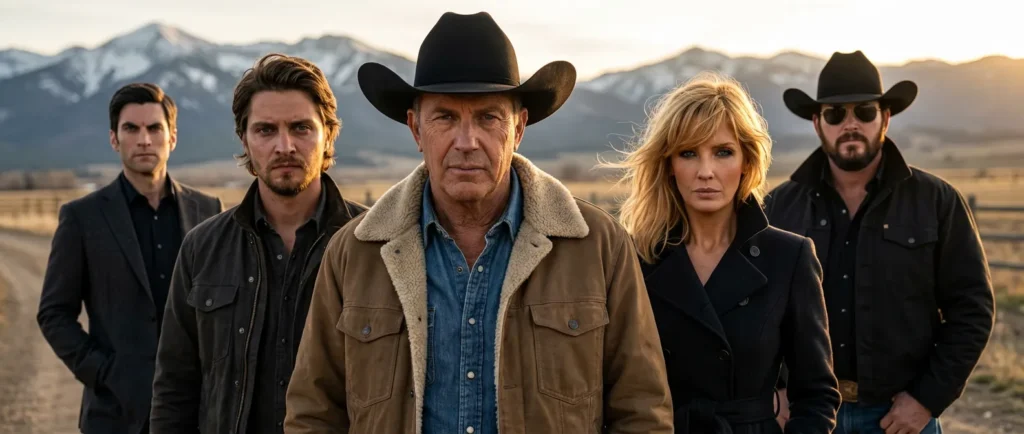
When Yellowstone ended, a lot of people acted like they’d always known how it would go. They hadn’t. For six years this was the cable Western critics wouldn’t touch and audiences wouldn’t leave alone — until the star left, the ranch sold for pocket change, and the franchise ate the story that started it.
Here’s the part that only makes sense after the credits.
1. The Show That Cable Bet Everything On
When Yellowstone premiered in 2018, it wasn’t a sure thing. Paramount Network had just rebranded. It needed a hit to stay relevant. This wasn’t a fancy HBO production or a Netflix original. It was a cable channel betting on a modern Western in an era obsessed with superheroes.
The risk paid off, even though early reviews were terrible. Critics dismissed it. Viewers didn’t care. The ratings just kept going up.
That gap between critics and audiences became the show’s defining trait — and it never really closed. Yellowstone wasn’t built to win awards panels. It was built for people who still made a point to be home when it aired.
2. Kevin Costner Never Planned to Do TV
Costner made his name starring in Western movies. For stars of his generation, television usually looked like a step down. Streaming softened that stigma, but he still didn’t casually sign on. He negotiated hard — schedule, scripts, control over how the show was made.
His eventual exit during Season 5 showed how shaky that arrangement always was. The headlines said “creative differences.” The real fight was about time, money, and who ran the room.
Costner later said he’d signed for seasons 5, 6, and 7, then watched the deal get remade into 5A and 5B. He worked 43 days. They didn’t have scripts for 5B. He even offered a week if they wanted to kill the character. That’s not a movie star ghosting a cable drama. That’s a production that lost the center of its own story mid-run.
3. Taylor Sheridan Built an Empire — Fast
Sheridan didn’t just make a show. He built a franchise machine.
The prequels came quick: 1883, then 1923. Paramount handed him one of the richest deals in television and built production infrastructure in Texas to keep up. For a while it looked like he’d invented a new kind of Western factory.
Speed has a price. Writing multiple series at once meant long gaps between Yellowstone seasons, scripts that felt rushed, and rising tension between cast, creator, and studio. The empire grew. The original show started to feel like one more product on the line.
4. Real Cowboys. Real Injuries. Real Weather
Unlike most modern dramas, Yellowstone insisted on actual ranch work. Actors rode horses, worked cattle, and shot scenes that depended on animals, weather, and daylight. You can’t fake all of that on a soundstage — and when you try, fans can smell it.
That authenticity is a big reason people loved it. It’s also why production was expensive, exhausting, and hard to schedule. The mud wasn’t just set dressing. It was the point.
5. The Ratings Hit Critics Missed
For years, awards shows looked past it. Review scores sat lower than other big cable dramas. None of that slowed the audience down.
Yellowstone became one of the most-watched scripted series on television. It pulled in viewers who weren’t living inside streaming apps — people who treated Sunday night like an appointment. It proved there was still a huge appetite for a slow-burn power drama set in rural America, even if the critic class never fully signed the permission slip.
6. The Costner Exit Changed Everything
When talks between Costner and the production broke down in the back half of Season 5, the whole architecture started to crack.
Yellowstone had always orbited John Dutton. Remove him and you’re not trimming a subplot — you’re rewriting the show. Spin-offs got accelerated. The franchise’s need to expand started crowding out the original story.
In June 2026, Sheridan told the Bill Simmons podcast that Costner was only supposed to be in the first three seasons under the original contract. Paramount, he said, was “so scared of not having Kevin” that they “had to tread water.” Sheridan’s version of the plan: hand the ranch to the youngest son. Costner’s version of the later seasons looked very different. Both can be true at once. The result was the same — a flagship drama that outgrew the deal holding its star in place.
That wasn’t a scandal. It was business colliding with myth.
7. John Dutton Died. The Ranch Sold for $1.25 an Acre.
The series finale — “Life Is a Promise,” December 2024 — finally did what seasons of brinkmanship kept circling. John Dutton was buried on the ranch. Jamie was killed by Beth. Kayce sold the land to Broken Rock and Thomas Rainwater for $1.25 an acre, about $1.1 million total — the same price James Dutton paid generations earlier.
Rainwater’s line landed like a verdict: the worst land deal since his people sold Manhattan. It also closed a loop planted all the way back in 1883, when Spotted Eagle’s prophecy said the land would return after seven generations. Yellowstone didn’t just end a TV show. It cashed a check the prequel had written years earlier.
Beth and Rip left with Carter. Kayce kept a small parcel. The Dutton kingdom didn’t fall in a gunfight. It got liquidated — on purpose — into the story the franchise had been hinting at the whole time.
8. The Spin-Off Machine That Ate the Story
By the time the credits rolled, Yellowstone wasn’t one show anymore. It was a catalog: 1883, 1923, then Dutton Ranch with Beth and Rip in 2026, and Marshals with Kayce.
That’s the quiet truth under all the premiere-night noise. The original series made Paramount a Western universe. Once that universe was worth more than any single season of Yellowstone, the incentive flipped. Finish the ranch story. Feed the next one. Keep the brand warm.
Fans can love both things and still feel the tension. A show about holding land at any cost became a company that couldn’t stop selling new land.
9. Franchise vs. Story — Yellowstone’s Last Real Fight
Strip away the mustangs and the boardrooms and Yellowstone was always about the same question: what do you destroy to keep what you love?
In the end, that question turned on the show itself. Costner’s exit, Sheridan’s empire, the $1.25 acre sale, the prophecy payoff, the spin-offs waiting in the wings — none of that was “untold” because it was secret. It was untold because in 2020, none of it had happened yet.
Yellowstone didn’t just survive cable’s gamble. It proved how fast a hit becomes a machine — and how little even John Dutton could do once the machine needed the land more than the man.
Leave a Reply